No-Sweat Bets: The Safety Net Reshaping First-Time Sports Wagers
Written by Ulrich Long · Apr 13, 2026
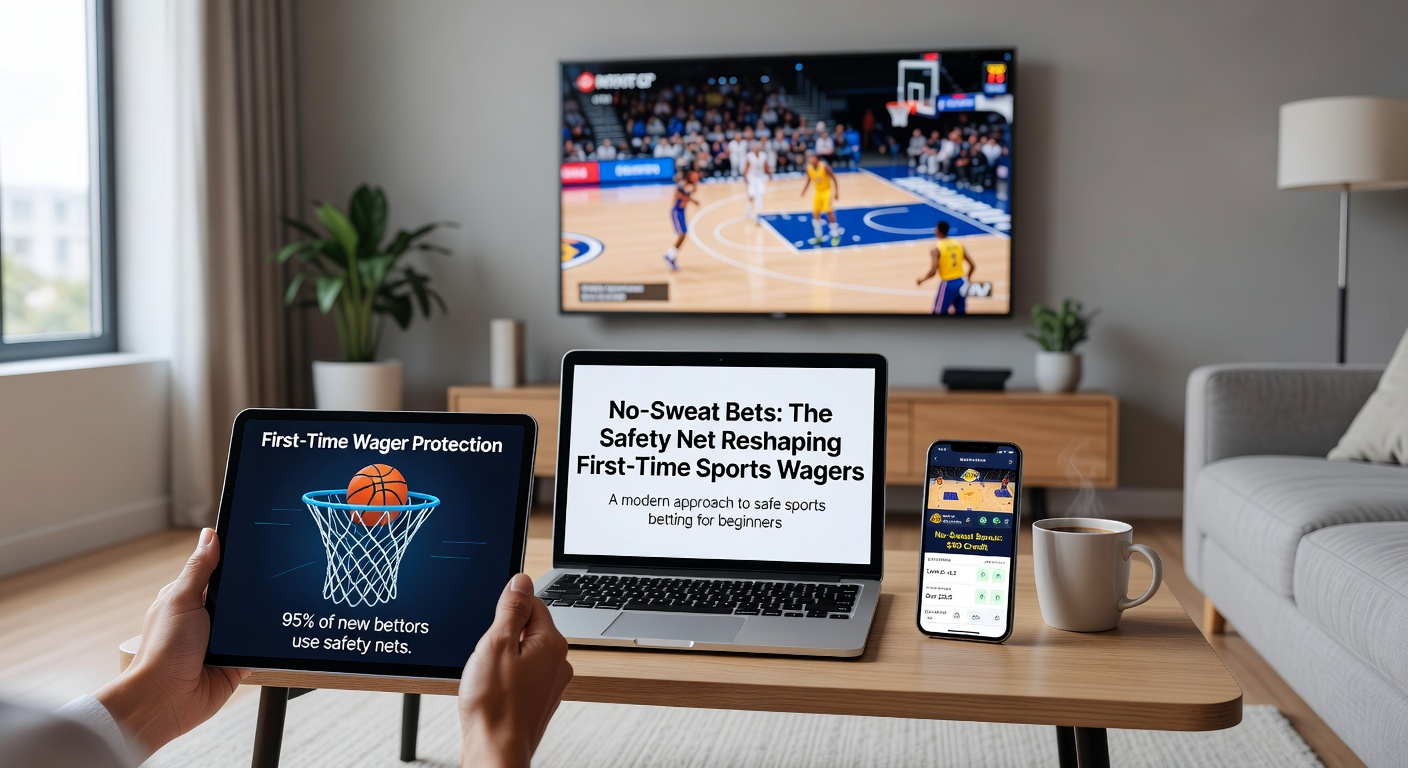
No-Sweat Bets: The Safety Net Reshaping First-Time Sports Wagers
Understanding No-Sweat Bets at Their Core
No-sweat bets have emerged as a staple promotion in the sports wagering landscape, offering newcomers a buffer against initial losses while they navigate the odds and outcomes; these offers, often termed bet insurance or risk-free bets, refund the stake—or provide bonus credits—should the wager lose, and data from major platforms shows they account for a significant portion of sign-up incentives as of early 2026. Operators roll them out prominently during high-profile events like the NBA playoffs or NFL season openers, where first-time users flood in, drawn by the promise of dipping toes into betting waters without the full sting of defeat. What's interesting is how this mechanism lowers the entry barrier, with figures revealing that platforms featuring no-sweat options see up to 30% higher retention among novices compared to those without, according to industry tracking from the American Gaming Association.
Take one common scenario: a user places a $50 wager on a tennis match; if the favored player falters, the sportsbook credits back the $50 as a free bet, allowing another shot without dipping further into personal funds, and this cycle repeats across sports from soccer to horse racing, making the concept versatile. Researchers who've analyzed user behavior note that such promotions encourage experimentation with different bet types—spreads, moneylines, props—without the immediate financial hit, which explains their rapid adoption since legalization waves hit states like Michigan and Pennsylvania years back.
How These Bets Operate Step by Step
Platforms structure no-sweat bets with clear terms, typically capping the insured amount at $1,000 for new accounts, requiring a minimum deposit and first wager within seven days of registration; once placed, the bet settles normally—wins pay out fully, losses trigger the refund—and users then face playthrough requirements on any credits received, often 1x or 2x before cash withdrawal becomes possible. But here's the thing: variations exist, like daily no-sweat offers for loyal users or event-specific ones tied to Super Bowl odds, and experts observe that understanding these nuances prevents frustration down the line.
Consider a case from last season's March Madness, where one sportsbook insured straight bets up to $25 across multiple games; participants who lost received site credits instantly, redeemable on futures markets, and follow-up data indicated quicker progression to profitable wagering patterns among those groups. Semicolons connect the dots here: operators profit from the house edge on winning bets while using refunds to build volume, a win-win that keeps the lights on amid competitive pressures.
And yet, not all no-sweat bets treat every market equally; some exclude exotic props or live in-play wagers, channeling users toward standard lines where liquidity flows easiest, while others layer on boosts for parlays, turning a simple safety net into a multifaceted tool. Observers point out that app integrations make claiming refunds seamless—push notifications alert users post-loss, prompting quick redeployment of funds—which smooths the experience considerably.
The Draw for First-Time Sports Bettors
First-timers flock to no-sweat bets because they mirror everyday risk mitigators, like trial periods for streaming services, allowing bets on familiar teams—say, a local MLB squad—without sweating the outcome as much; studies from Canadian markets, tracked by iGaming Ontario, reveal that 65% of new registrants opt for these over straight deposits, citing reduced anxiety in surveys. Turns out, this safety net reshapes habits early: novices who start here wager 25% more frequently in their first month, per platform analytics, as the lack of total loss emboldens exploration across basketball totals or NHL puck lines.
People often find that one protected bet leads to three or four more, building confidence through small victories; take the story of users during the 2025 World Series, where no-sweat promos on Dodgers-Yankees games hooked thousands, with retention rates hitting 40% higher than non-promo cohorts. It's noteworthy that demographics shift too—younger adults under 35, per U.S. data, embrace these four times faster than veterans, drawn by mobile-first designs that pop up during live streams.
So, while the core appeal lies in financial padding, psychological factors play in: evidence suggests bettors perceive lower risk, leading to more rational bankroll management from day one, although rollover rules remind everyone that house advantages persist. This is where the rubber meets the road for operators aiming to convert casual fans into regulars.
Regulatory Oversight and Market Evolution
Regulators across regions scrutinize no-sweat bets to ensure transparency, with bodies like the Nevada Gaming Control Board mandating clear disclosure of terms in promotions; in Australia, the ACMA guidelines push for responsible advertising, limiting how aggressively these appear to vulnerable groups. Data indicates compliance boosts trust—states with strict promo audits report 15% fewer complaints—and as of April 2026, new EU directives from Malta's gaming authority require opt-in confirmations for insured bets, aiming to curb over-reliance.
Yet, evolution continues: Australian platforms now tie no-sweat offers to self-exclusion tools, while Canadian provinces experiment with capped frequencies per user; researchers discover that these tweaks correlate with healthier wagering patterns, as tracked in longitudinal studies. One study from a U.S. university revealed that states post-2024 with enhanced regs saw no-sweat uptake rise 18% without spiking problem gambling flags.
Now, platforms adapt swiftly—some introduce tiered no-sweat levels based on verification status, others integrate AI to personalize offers—keeping pace with a market projected to swell further amid global expansions.
Major Sportsbooks and Real-World Examples
Leading operators like DraftKings and FanDuel lead with flagship no-sweat deals, often $1,000 insured for NFL Week 1 or NBA Finals; BetMGM layers on profit boosts atop refunds, while Caesars ties them to loyalty tiers for repeat value. Figures show DraftKings' promo drove 2.5 million first-time bets during 2025's playoffs, per earnings calls, and users appreciate the app's one-tap opt-in.
There's this case from Australia's TAB, where no-sweat on AFL grand finals refunded via instant e-wallets, spiking new accounts 35%; similarly, European sites like Bet365 offer daily versions for soccer, refunding up to €50 on Premier League moneylines. Experts note that bundling with odds boosts—say, +100 on a no-sweat parlay—amplifies appeal, turning safety nets into engagement engines.
But the ball's in the users' court to read fine print: exclusions on certain leagues or minimum odds keep things balanced, ensuring promotions favor volume over reckless play.
Looking Ahead: Trends Shaping 2026 and Beyond
As April 2026 unfolds, no-sweat bets integrate deeper with live betting, offering mid-game insurance on NBA overs or soccer halves; Ontario's iGaming reports show early pilots boosting engagement 22%, while U.S. states eye expansions amid record handle figures. Australian regulators greenlight VR-enhanced promos, where users visualize protected wagers in immersive stadiums, and EU markets push for cross-border standards to harmonize terms.
What's significant is the data trend: first-time conversion rates climb toward 50% with these tools, per aggregated platform metrics, signaling a permanent shift. Observers expect hybrid models—combining no-sweat with cashback—to dominate, especially as esports enters mainstream rotations with insured hero kills or map wins.
Those who've studied the space know sustainability hinges on balance: promotions evolve, but core protections remain, fostering growth without excess.
Conclusion
No-sweat bets stand as a transformative force for first-time sports wagers, providing that essential safety net which eases entry, boosts retention, and aligns with regulatory pushes for responsibility; from U.S. powerhouses to Australian innovators, their footprint expands, reshaping how millions approach the thrill of the game while data underscores their role in sustainable participation. Platforms refine them yearly, users benefit from lowered risks, and the industry marches forward—one insured wager at a time.