Machine Learning's Quiet Influence on Tailored Bonus Structures in Virtual Gambling Spaces
Written by Ulrich Long · Jul 18, 2026
Machine Learning's Quiet Influence on Tailored Bonus Structures in Virtual Gambling Spaces
Virtual gambling platforms have integrated machine learning systems that process player activity logs, deposit histories, and session durations to generate bonus offers matched to specific behavioral profiles, and these systems operate continuously across global networks as of July 2026.
Player Data Processing Foundations
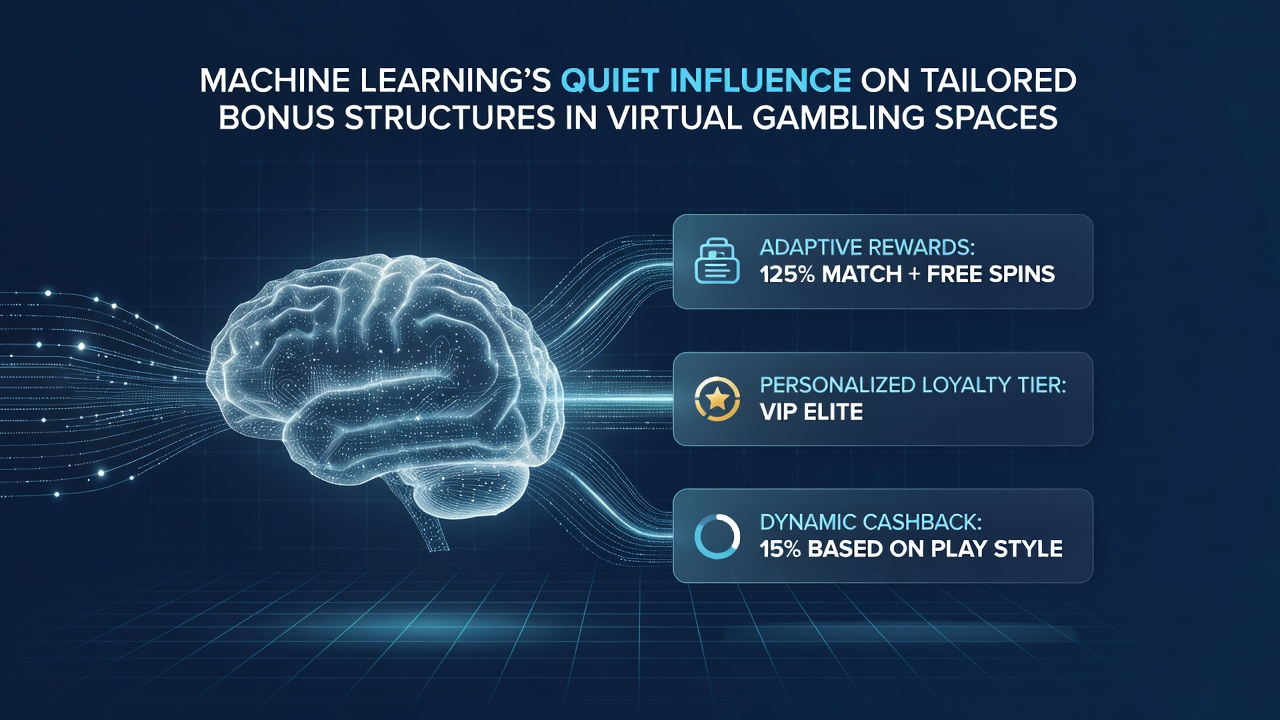
Operators collect structured datasets that include wager frequency, game category preferences, and response rates to previous promotions, then feed those inputs into supervised learning models that classify users into dynamic segments. Clustering algorithms identify groups with similar risk tolerances and spending velocities, allowing platforms to adjust bonus parameters such as match percentages, wagering requirements, and validity periods without manual intervention.
Research from the University of Nevada, Las Vegas Center for Gaming Research shows that these models achieve higher prediction accuracy when they incorporate real-time signals like time-of-day activity and device type, and the resulting segmentations update at intervals ranging from hourly to daily depending on traffic volume.
Algorithmic Personalization Mechanisms
Reinforcement learning agents test variations of bonus structures against control groups within the same platform, then scale the highest-performing combinations to individual accounts based on similarity scores. Decision trees and neural networks evaluate the probability that a given player will complete rollover conditions or extend session length after receiving a targeted free-spin allocation versus a cashback credit.
Platforms apply these outputs through automated rule engines that trigger offers at moments of predicted churn or during identified peak engagement windows, and the engines maintain separate calibration layers for different regulatory jurisdictions to comply with local wagering limits.
Operational Integration Patterns
Backend systems link machine learning outputs directly to payment processors and game servers so that accepted bonuses activate instantly across desktop and mobile interfaces. API endpoints pass feature vectors derived from player histories to scoring services that return recommended offer IDs within milliseconds, and logging layers record acceptance rates alongside subsequent betting behavior for model retraining cycles.
Multi-site operators synchronize these models across brands while preserving jurisdiction-specific constraints, and the synchronization occurs through federated learning setups that share parameter updates without exchanging raw player records.
Regulatory and Compliance Frameworks
Agencies such as the Alcohol and Gaming Commission of Ontario require operators to document how algorithmic decisions affect bonus fairness and to provide audit trails that demonstrate non-discriminatory treatment across player cohorts. Reports submitted to these bodies detail the variables used in segmentation and the testing protocols applied to prevent unintended bias in offer distribution.
Compliance teams review model drift metrics monthly because changes in player populations or game libraries can shift the accuracy of older predictions, prompting retraining schedules that incorporate fresh labeled data from completed bonus cycles.
Observed Effects on Platform Metrics
Industry reports indicate that platforms deploying these tailored structures record measurable shifts in deposit conversion rates and average revenue per user within the first quarter of implementation, although the magnitude varies by market maturity and player acquisition channels. Retention curves extend when bonus parameters align with individual play styles, and operators track these extensions through cohort analysis that compares treated and untreated groups over multi-week periods.
Cross-border operators note that synchronization between machine learning pipelines and regional payment rails reduces latency in bonus fulfillment, which in turn correlates with higher completion rates for time-sensitive offers.
Conclusion
Machine learning continues to refine the mechanics of bonus delivery in virtual gambling environments by converting behavioral data into actionable offer parameters, and the technical infrastructure supporting these processes has stabilized around continuous model updates and jurisdiction-aware deployment rules. Observers tracking developments through July 2026 document incremental improvements in prediction precision alongside ongoing requirements for transparency and auditability from regulatory bodies across multiple regions.